Opening
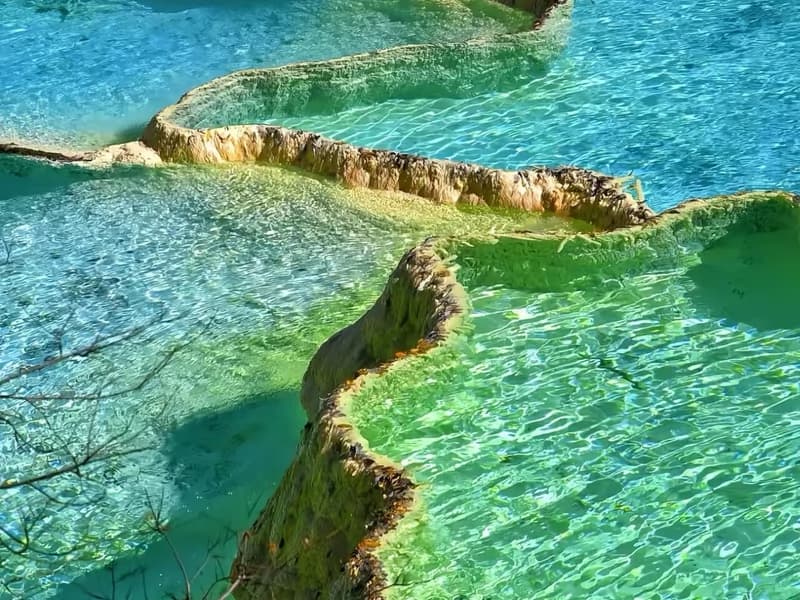
Five Flower Lake holds four colors at once: bright blue, emerald green, deep brown, and milky white. That's not post-processing — it's the result of mineral deposits and algae layering in the travertine sediment below the surface. Jiuzhaigou has no city to wander, no street food markets, no nightlife. The entire park is a system of tiered lakes, waterfalls, and forest trails connected by shuttle buses and wooden walkways, designed to be covered in a day.
The reason to come is specific: water this color doesn't exist anywhere else in China.
At a Glance
| Best time to visit | Late September–mid October (autumn color + lake reflections); winter for ice formations |
| Recommended stay | 2 days in the park + 1 day at Huanglong = 4 days total including Chengdu transit |
| Budget per day | ¥500–800 (tickets + transport; accommodation separate) |
| Getting there | From Chengdu: high-speed rail + shuttle bus ~4 hours; flight + shuttle ~3 hours |
| Known for | Multicolored travertine lakes, autumn foliage, Five Flower Lake, Nuorilang Falls |
| Booking for foreigners | Trip.com (English interface, accepts Visa/Mastercard); book 3–4 weeks ahead in peak season |
| Special requirements | Daily visitor quota; real-name ticket purchase required; no private vehicles inside the park |
Why Jiuzhaigou Is Worth the Trip
Jiuzhaigou is a national park, not a city. There are no historic lanes, no teahouses, no back-street restaurants worth exploring. The case for coming rests entirely on the lakes.
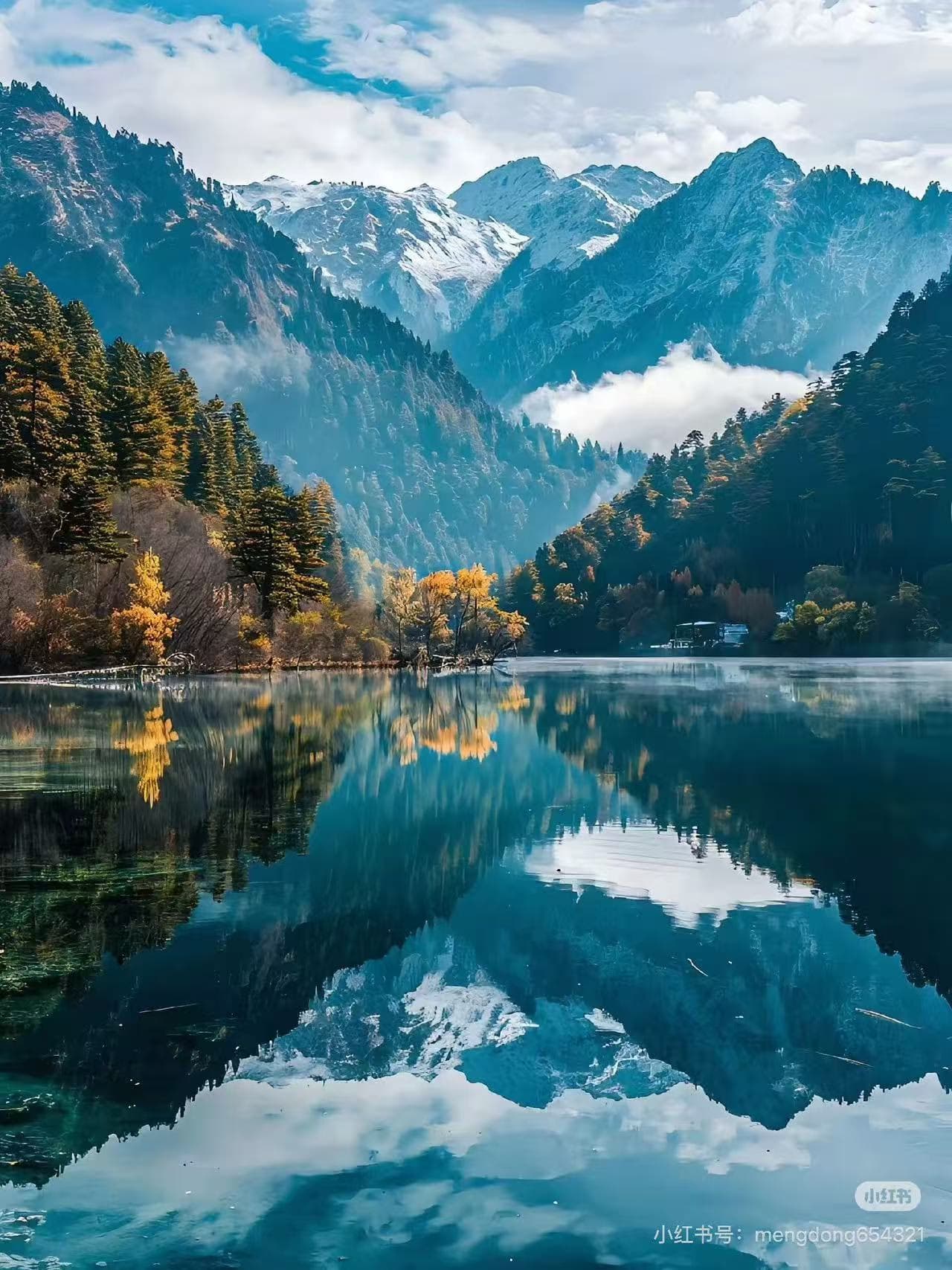
The travertine geology creates colors that shift in the same body of water — Five Flower Lake shows blue, green, and brown simultaneously, with fallen timber from long-dead trees visible through the water below. When autumn foliage arrives in late September, the colors reflect off the lake surfaces. Photographers from across the world schedule trips around this two-to-three-week window specifically.
If you can only pick one: want multicolored lakes and autumn reflections — choose Jiuzhaigou. Want sheer sandstone pillar formations and glass walkways — choose Zhangjiajie. The two parks are not interchangeable; they offer fundamentally different landscapes.
One honest note: peak season crowds are real. Daily visitor numbers can approach the 41,000-person cap in October, particularly around China's Golden Week holiday (October 1–7). Visitors who want a quieter experience should consider mid-September, when the color has started to turn but hasn't yet peaked, or the winter season for ice formations with a daily cap of 23,000.
Ways to Experience Jiuzhaigou
Walk the lake circuit at your own pace
The park's shuttle bus system stops at roughly 20 points across the main valleys, and visitors can board and exit freely. The standard approach is to ride the bus up to the highest point and walk down — the descending route follows wooden walkways along the lakesides and keeps the light in your favor in the afternoon. Allow a full day to cover the main valley circuit properly. For the exact loop order, shuttle strategy, and the best time of day to reach each lake, see How to Navigate Jiuzhaigou.
The autumn color window: late September to mid-October
Around September 25, larch and aspen trees above 2,800 meters begin to turn. By early October, the color is at full saturation and reflects into the lake surfaces. This is the peak of peak season — book tickets and accommodation at least a month out. Those willing to come a week earlier get most of the color with noticeably thinner crowds.
Best Time to Visit Jiuzhaigou — season-by-season guide
Combine with Huanglong: a second UNESCO site, two hours away
Huanglong Scenic Area is another UNESCO World Heritage site, roughly a two-hour drive from Jiuzhaigou. Its travertine pools sit at higher altitude (3,500–3,900m compared to Jiuzhaigou's 2,000–3,100m), which means altitude sickness is a more significant factor. Entrance is ¥200, plus ¥80 for the cable car. The combination is worth it if your schedule allows — treat Huanglong as a full separate day, not a half-day add-on.
Visiting Huanglong: How to Combine It with Jiuzhaigou covers the altitude difference, the cable car, and how to fit both parks into a 4-day itinerary from Chengdu.
Winter ice formations: a different kind of visit
From December through February, Nuorilang Falls and sections of the lake edges freeze. The daily cap drops to 23,000, the park is considerably quieter, and the ticket price falls to ¥160. Some walkways may be closed — check current conditions before booking. The color contrast between ice formations and turquoise water is unlike the autumn version of the park.
Key Sights Inside the Park
Five Flower Lake (Wuhua Hai)
The most visited lake in the park and the clearest demonstration of travertine coloring — the water grades from pale blue at the edges to deep green at the center, with submerged fallen logs visible through the surface. Morning light hits the lake directly and produces the strongest colors. The viewing platform on the right side of the walkway offers the cleanest reflection shot.
Don't miss: Arrive before 10:00 to avoid the midday crowd peak. This is the most visited spot in the park.
Nuorilang Falls
At roughly 270 meters wide, Nuorilang is one of the broadest waterfalls in China's highland areas. It drops in multiple tiers across a travertine shelf and is accessible without any significant hiking. The Nuorilang Service Center nearby is the main shuttle bus transfer point — this is where most visitors switch buses mid-circuit.
Tip: The walkway beside the falls is flat and accessible. Winter visitors will find it partially frozen.
Long Lake (Chang Hai)
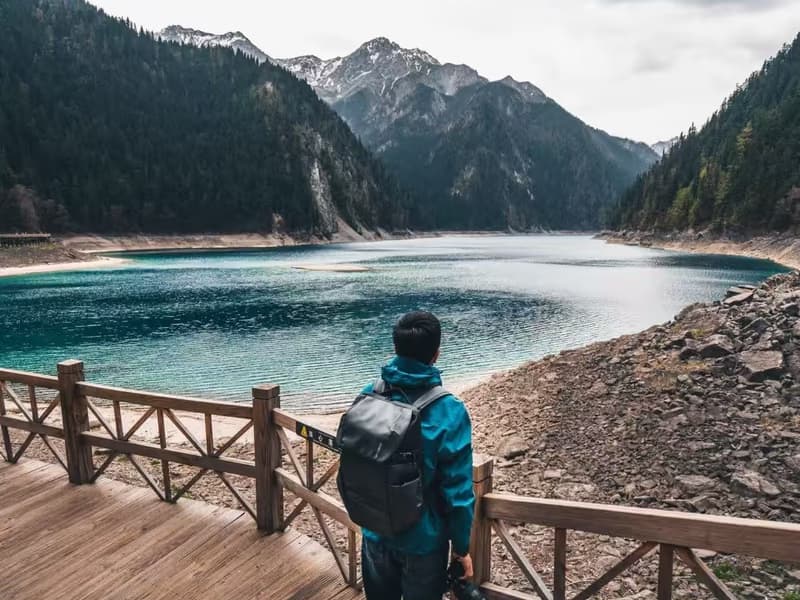
The park's highest lake at 3,103 meters above sea level, and its largest by surface area. The color here runs deep blue rather than multicolored. On clear days, snowcapped peaks reflect in the surface. The shuttle bus stops a short walk from the lakeside — follow the path from the drop-off point.
Tip: This is the highest point in the standard circuit. Anyone sensitive to altitude should pace themselves on arrival.
Where to Stay
Zhangzha Town (park entrance area) — most convenient
The cluster of hotels and guesthouses at the park entrance gate is the standard base for most visitors. Walking distance to the ticket gate means you can enter early to beat the crowds. Prices run high in peak season. Dining is mostly Tibetan-style restaurants in town — options are limited but functional.
Good for: Anyone spending two or more days focused on the park Watch for: Book at least four weeks ahead in October; prices spike significantly during Golden Week
Songpan County — budget alternative near Huanglong
Songpan is a small town roughly between Jiuzhaigou and Huanglong, with more affordable accommodation options than the park entrance area. It works as a base if you're splitting the itinerary across both parks over two days.
Good for: Travelers combining Jiuzhaigou and Huanglong who want flexibility between the two Watch for: Accommodation selection is limited; search Trip.com and book early
Chengdu — base city option
Chengdu is a full-service city with a wide range of hotels across every price point. The round trip to Jiuzhaigou is feasible in a single day on paper, but four hours each way compresses park time significantly. Most visitors who do the Chengdu-Jiuzhaigou day trip end up wishing they had stayed overnight near the park.
Good for: Travelers with Chengdu already locked in and Jiuzhaigou as a single extension day Watch for: Works better in the off-season when the park opens longer; check first and last shuttle bus times before committing to this
Where to Stay for Jiuzhaigou weighs each of these three bases in detail — and what staying in Chengdu actually costs you in morning park time. If Chengdu is your base, start with the Chengdu City Guide.
Getting There and Around
High-speed rail + shuttle bus (recommended)
Step 1 — Book a high-speed train from Chengdu East Station (Chengdu Dong) to Huanglongjiuzhai Station on Trip.com or the 12306 app. The journey takes roughly 1 hour 40 minutes; fares run ¥80–120. Huanglongjiuzhai Station is a terminus built specifically for these two parks — there is nothing else at the station.
Step 2 — On exit, follow signs for Tourist Buses / Shuttle Buses. The ticket counter is on the right side of the exit hall. Fares are ¥50–60 (cash or Alipay); the ride to the park entrance takes about two hours. The driver stops at the main entrance gate — follow the majority of passengers off the bus.
Total travel time: approximately 4 hours. Aim for the 8:00–9:00 train from Chengdu so you arrive before 13:00 — the shuttle bus system inside the park stops running at 17:00.
Trip.com's train booking interface operates in English and accepts Visa and Mastercard.
Flight + shuttle
Chengdu Tianfu Airport to Jiuhuang Airport takes approximately 55 minutes. Flights in peak season run ¥1,000–1,500, and should be booked well in advance — cancellations due to mountain weather are not uncommon, and there is no same-day alternative if a flight falls through. Airport to park entrance by shuttle takes about two hours (¥50–60). Total travel time approximately 3 hours.
Long-distance bus
Direct buses depart from Chadianzi Bus Station in Chengdu, running 8–10 hours to the park entrance. Fares are ¥120–170. This option works for travelers with time to spare, tight budgets, or those traveling onward to Songpan rather than returning to Chengdu.
Getting around inside the park
No private vehicles are permitted in Jiuzhaigou. All movement within the park relies on the mandatory shuttle bus system, which is included in the ticket price. Buses are frequent — expect 10–20 minute waits in peak season. The standard strategy is to ride up to the highest point and walk the descending lakeside walkways back toward the entrance. The walkways are well-maintained and mostly flat.
For step-by-step booking instructions on each route from Chengdu — including which to pick and what to do if a flight is cancelled — see Getting to Jiuzhaigou from Chengdu.
Before You Go
Ticket booking — do this first
All tickets require real-name registration against a passport number. The most accessible booking option for foreign visitors is Trip.com (English interface, accepts Visa and Mastercard). Search "Jiuzhaigou National Park" and select your date. The park's official WeChat channels (Abatour / Jiuzhaigou Tourism) also sell tickets but require a WeChat account.
Daily limits: 41,000 visitors in peak season (April 1–November 15); 23,000 in the off-season. Tickets for October weekends sell out weeks in advance. Peak season entrance: ¥280 (includes shuttle bus). Off-season: ¥160.
Tickets are date-specific and non-transferable. A ticket not used within 24 hours of purchase is forfeited.
Payment inside the park
Food stalls and shuttle bus ticket counters inside the park accept Alipay and WeChat Pay. Some counters also accept cash. Foreign bank cards are not reliably accepted at point-of-sale terminals within the park. Carry RMB cash as a backup, or set up Alipay International (which can link to a foreign card) before you arrive.
→ Staying Connected in China: SIM Cards, Internet & WiFi
Altitude
Jiuzhaigou sits between 2,000 and 3,100 meters above sea level. Most visitors arrive directly from low-altitude cities and may experience mild symptoms — headache, shortness of breath, fatigue — on the first day. Stay hydrated, avoid alcohol on arrival day, and don't push the pace. Huanglong is significantly higher (3,500–3,900m) and warrants extra caution.
Serious symptoms — breathlessness at rest, persistent severe headache, confusion or disorientation — require immediate descent and medical attention. The Jiuzhaigou Safety Guide covers how the altitude gradient here compares to Lhasa and what the 2017 earthquake repairs mean for visitors today.
Jiuzhaigou-specific notes
- English signage at major bus stops is present; trail signs and staff communications are mostly in Chinese. Download an offline map before entering (Maps.me or Gaode International) — mobile signal is inconsistent in the upper valleys.
- Temperature swings of 10–15°C between morning and afternoon are normal in spring and autumn. A packable layer is essential regardless of the forecast — the Jiuzhaigou Packing List covers high-altitude sun protection, autumn layering, and the extra gear Huanglong demands.
- Dining options inside the park are minimal and overpriced. Eat a full breakfast before entering and carry snacks. Restaurants in Zhangzha Town near the entrance are the practical option for lunch and dinner.
- The 2017 earthquake caused significant damage to the park; infrastructure has been assessed and repaired, and the park has been open to visitors since 2019.
Closing
The quota system that sounds complicated is actually what makes Jiuzhaigou manageable for independent travelers. Buy on Trip.com with your foreign card, show your passport at the gate, board the shuttle — the logistics inside the park are more organized than most Chinese tourist sites because the visitor flow is controlled.
If Chengdu is already on your itinerary, Jiuzhaigou is four hours north. The autumn color window runs late September through mid-October. That's a reasonable peg to plan around.
Related guides in this series:
Planning the logistics
- Getting to Jiuzhaigou from Chengdu — train, flight, and bus compared, with booking steps
- Where to Stay for Jiuzhaigou — Zhangzha Town, Songpan, or Chengdu
- Best Time to Visit Jiuzhaigou — season-by-season, with the autumn window
- Jiuzhaigou in Summer — what the green season looks like
- Jiuzhaigou Packing List — altitude sun, autumn layers, photography gear
- Jiuzhaigou Safety Guide — altitude gradient and post-earthquake status
Inside the park and beyond
- How to Navigate Jiuzhaigou — loops, shuttle buses, and the best viewpoints
- Visiting Huanglong — the second UNESCO site, two hours away
- 4 Days in Jiuzhaigou and Huanglong — the full combined itinerary from Chengdu
- Chengdu City Guide — your gateway city