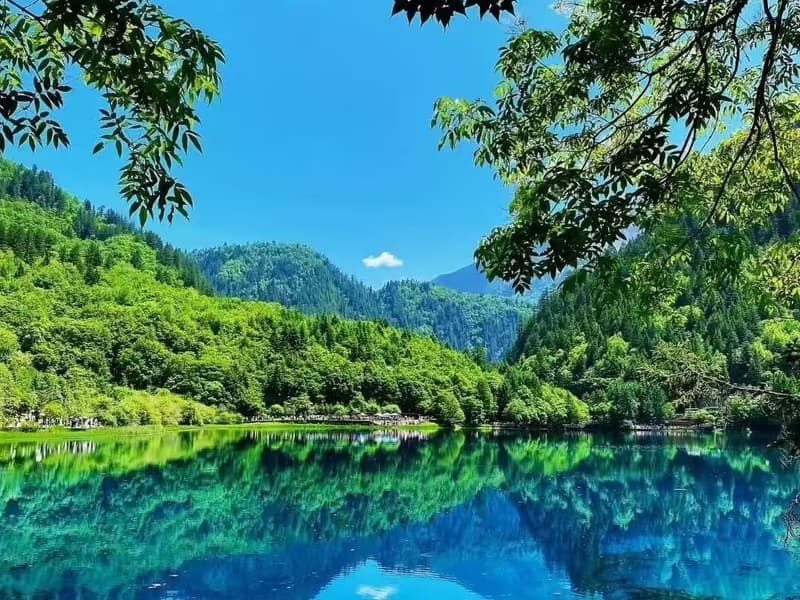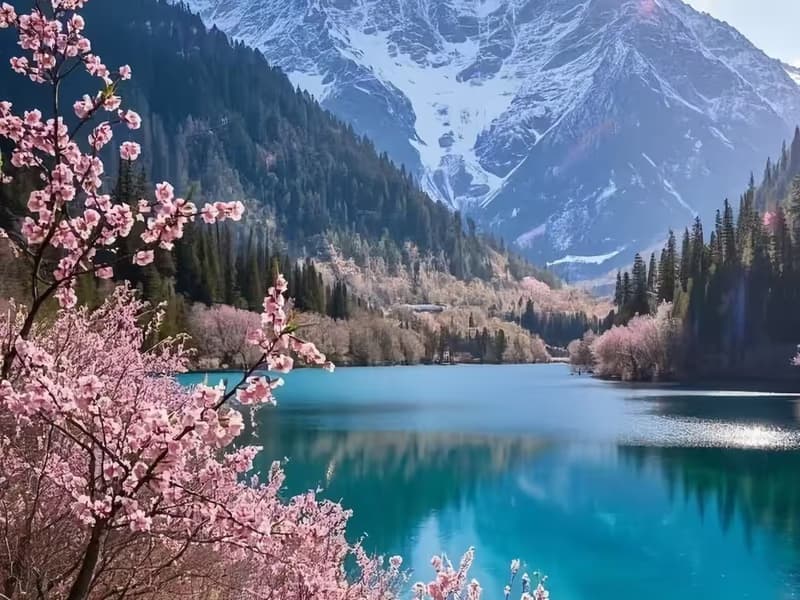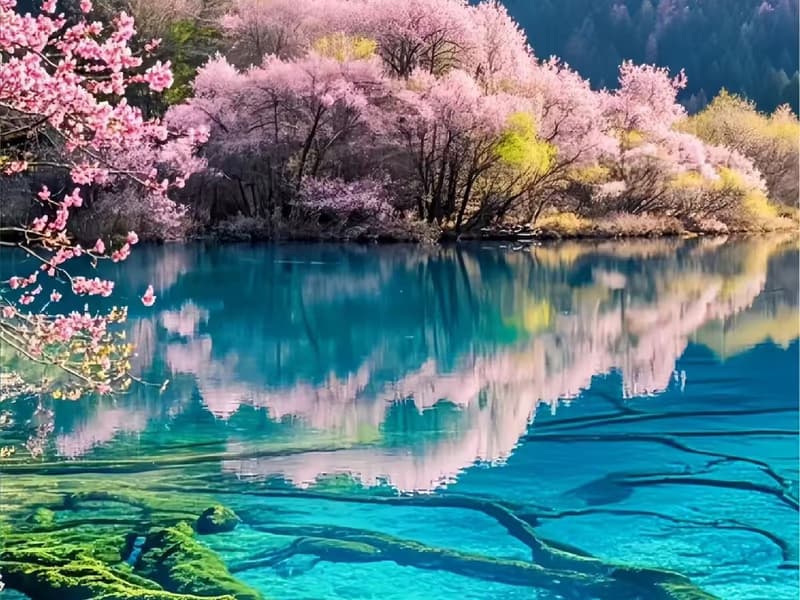
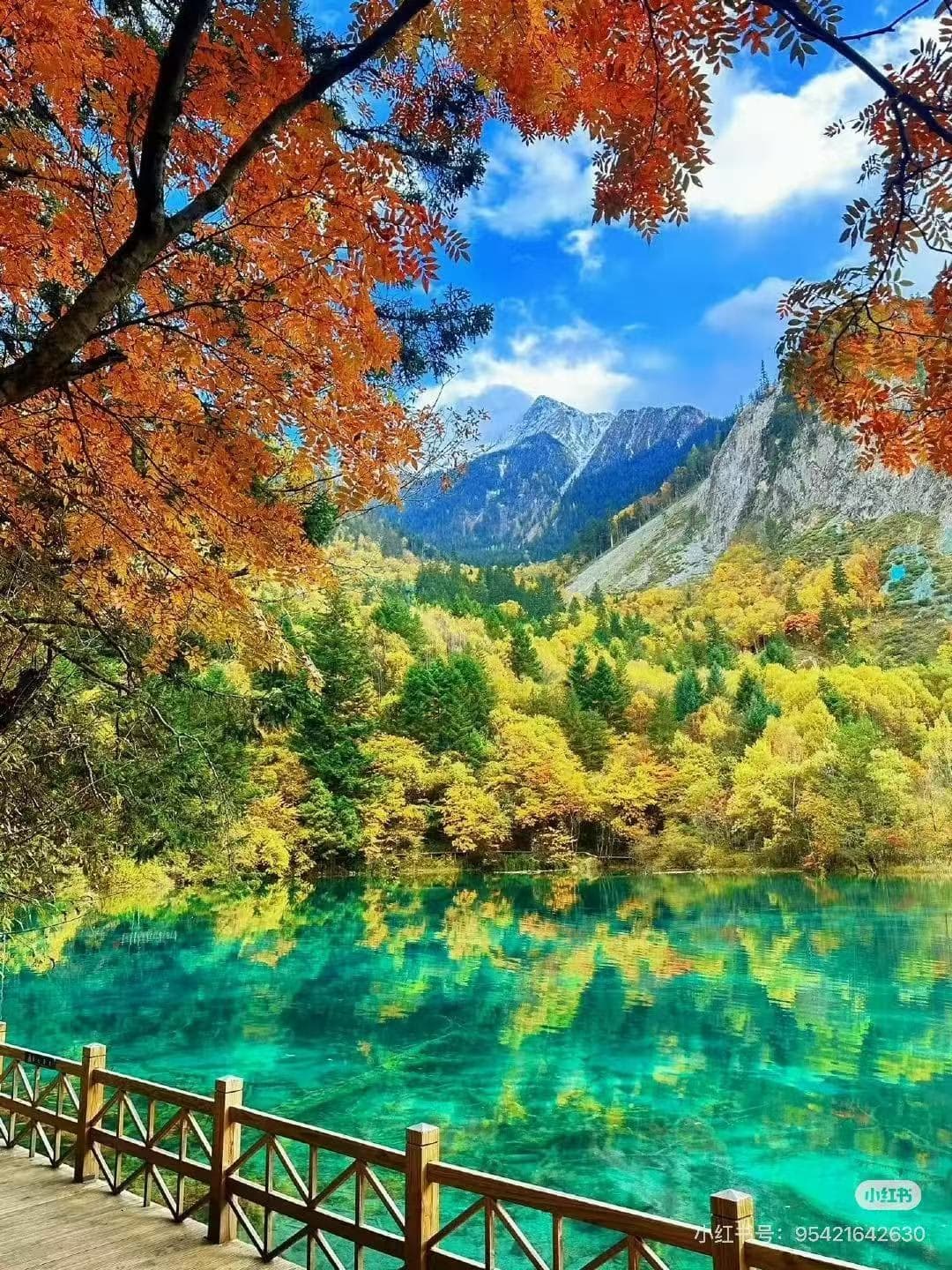
Jiuzhaigou has two versions: the one where autumn foliage reflects into multicolored travertine lakes, and every other time of year. The first version is concentrated into roughly three weeks — late September through mid-October. The second version is not without merit — winter brings ice formations, spring brings peak waterfall volume — but if you're asking when it's most worth a dedicated trip, the answer is clear.
The complication is crowds. China's Golden Week holiday falls in early October, pushing daily visitor numbers toward the 41,000-person cap at exactly the same moment the colors peak. The best foliage and the highest crowds arrive together. This guide is about finding the gap between them — or choosing a season where the trade-off works for you.
Quick Answer
| Your priority | Best window | Why |
|---|---|---|
| Autumn color at full peak | October 1–15 | Foliage saturated + lake reflections both at maximum |
| Autumn color, fewer crowds | September 20–30 | Color is starting, 30%+ fewer visitors than Golden Week |
| Budget, flexible dates | Late November–March (avoid Chinese New Year) | Off-season ticket ¥160, daily cap 23,000 |
| Winter ice formations | December–February | Nuorilang ice columns + frozen lake edges; completely different landscape |
| Spring waterfall volume | Late April–May | Snowmelt peaks; greenest foliage; quota pressure lower than autumn |
| Avoid everyone | January (after New Year)–mid-February | Deepest off-season; some walkways may close — confirm before booking |
In one sentence:
- For autumn foliage: September 25–October 15 (avoid Golden Week October 1–7, or accept it and buy tickets 4–6 weeks out)
- First-time visit with inflexible dates: late April–May is the next-best option
- Budget-first: November onward, ticket drops from ¥280 to ¥160
Autumn (Late September–Mid-October): The Window Worth Planning Around
Weather: 15–22°C during the day, dropping to 5–10°C in the mornings and evenings. October brings mostly clear skies and strong light — good conditions for photography. Late September can have brief showers.
Why this season works:
Larch and aspen trees above 2,800 meters begin turning around September 25. By early October the color is at full saturation — yellow, orange, and red foliage against the blue-green lakes. Five Flower Lake, which already shows four distinct colors in its water, picks up reflections from the trees above. This is the moment photographers from across the world schedule their trips around.
The crowd reality:
Golden Week (October 1–7) pushes daily visitors close to the 41,000 cap. Shuttle buses queue, Five Flower Lake walkways are shoulder-to-shoulder, and tickets can sell out weeks in advance. If your dates are flexible, September 20–30 is the better call: the color has started turning, crowds are noticeably thinner, and tickets are easier to find. October 8 onward, crowds begin retreating while the color holds for another week or two.
What to know:
- Peak season entrance: ¥280, includes mandatory shuttle bus
- For Golden Week or late September weekends: book on Trip.com 4–6 weeks out
- Sunrise in late September is around 07:10. Arrive at Five Flower Lake by 09:30 — that's the window when the light hits the water directly and the walkways are still manageable. After 10:00, crowds concentrate here more than anywhere else in the park
- Morning temperatures near freezing: a packable mid-layer is essential regardless of what the afternoon forecast says
Winter (December–February): The Most Underrated Season
Weather: 0–8°C during the day, dropping to -5 to -10°C at night. Snow is possible at higher elevations.
Why it's worth considering:
Nuorilang Falls and sections of the lake edges freeze. Ice columns form against the turquoise water — a color contrast that doesn't exist in any other season. The daily visitor cap drops to 23,000 (roughly 56% of peak season), the park is noticeably quieter, and the entrance fee falls to ¥160. Accommodation near the park entrance costs less too.
Trade-offs:
Some walkways and shuttle bus routes close in winter — check the current season's open areas on the official channels or Trip.com before purchasing tickets. Chinese New Year (late January or February depending on the year) triggers a secondary crowd spike, with prices rising accordingly. Cold weather drains camera batteries fast; carry a spare.
Good for: Travelers with flexible schedules who want a landscape that looks nothing like the social media version of Jiuzhaigou, or anyone for whom the ¥160 ticket and lower accommodation prices make a meaningful difference.
Spring (Late April–May): Peak Waterfalls, Fresh Green
Weather: Late April 15–22°C, May warming to 20–26°C. Spring cloud cover is common, with occasional rain.
Why it works:
Snowmelt from the surrounding peaks pushes Nuorilang Falls and the park's other waterfalls to their highest volume of the year. The forest is at its greenest. April sees peak-season pricing (¥280) return, but visitor numbers haven't reached autumn levels — tickets are easier to come by, and weekdays feel genuinely uncrowded.
Trade-offs:
Overcast days flatten the lake colors. The travertine blues and greens are most vivid in direct sunlight; on cloudy days Five Flower Lake looks closer to grey-green. There's no foliage color to compensate. Spring is the right answer if autumn isn't an option — not a compromise, but a different experience.
Good for: Visitors with fixed travel windows outside autumn, or those building a Chengdu–western Sichuan itinerary where Jiuzhaigou is one stop among several.
Summer (June–Early September): Cooler Than You'd Expect, Busier Than Ideal
Weather: 18–26°C during the day — roughly 10°C cooler than Chengdu at the same time of year. Afternoon thunderstorms are common.
Why some visitors choose it:
If the itinerary is already locked to June–August, Jiuzhaigou delivers: the forest is at maximum density, waterfalls run strong, and the lake colors are present. For visitors coming from humid lowland cities, the altitude makes a real physical difference.
Trade-offs:
Summer is domestic tourism peak season in China. July and August school holidays push visitor numbers close to autumn levels. The park has color but no foliage contrast — photographs taken in summer tend to read as green-on-blue rather than the multi-toned images that define the park's reputation. Wet walkways after afternoon rain require care.
Good for: Travelers whose dates are fixed in summer, or those pairing Jiuzhaigou with a broader western Sichuan loop where the season is already determined.
Crowds and Quotas: What Foreign Visitors Need to Know
Daily limits:
- Peak season (April 1–November 15): 41,000 visitors per day
- Off-season (November 16–March 31): 23,000 visitors per day
How to buy tickets as a foreign visitor:
Trip.com sells Jiuzhaigou tickets in English with Visa and Mastercard accepted. Tickets are date-specific and require a passport number at checkout — enter it exactly as it appears in your passport. Tickets purchased but not used within 24 hours are forfeited and non-refundable.
How far ahead:
- Golden Week (October 1–7): 4–6 weeks minimum
- Late September–mid-October weekends: 2–4 weeks
- Winter and spring weekdays: 1–2 weeks is usually sufficient
Timing inside the park:
The first two hours after opening and the hour before the last shuttle buses are the quietest periods. Five Flower Lake draws the heaviest concentration between 10:00 and 14:00. The Nuorilang Service Center is the main shuttle transfer point and stays busy throughout the day — factor in waiting time when planning your circuit.
When to Act Based on When You're Reading This
Reading this in June or July: Autumn tickets likely aren't open yet, but accommodation near the park entrance fills fast. Lock in your hotel in Zhangzha Town now — October weekends go early.
Reading this in August: October tickets on Trip.com are almost certainly open. Search your target dates today. If you can select a date, buy it — don't wait.
Reading this in September: Golden Week (October 1–7) is effectively sold out. Check September 25–30 or October 8 onward. Both windows still have color.
Reading this after October: Look at the winter option. The ¥160 ticket, 23,000-person daily cap, and Nuorilang ice columns make December and January a genuine alternative — not a consolation prize.
Practical Information
| Peak season ticket | ¥280 (includes mandatory shuttle bus), April 1–November 15 |
| Off-season ticket | ¥160, November 16–March 31 |
| Daily quota | 41,000 peak / 23,000 off-season |
| Booking | Trip.com (English, accepts Visa/Mastercard); passport number required |
| Inside the park | Cash or Alipay for food and incidentals; foreign cards not reliably accepted at park vendors |
| Altitude | 2,000–3,100m; mild altitude effects possible on day one — stay hydrated |
The autumn color window is not a secret — which is exactly why the September 20–30 and October 8–15 shoulders exist. Same landscape, meaningfully fewer people. If those dates don't work, winter is more interesting than most visitors assume, and spring is a solid backup with its own logic.
Pick your season, buy the ticket on Trip.com the day you decide — not the week before you fly.
Related guides:
- Jiuzhaigou Travel Guide
- Chengdu City Guide — most visitors use Chengdu as their base
- Getting to Jiuzhaigou from Chengdu (coming soon)