Lhasa is safe and manageable for foreign visitors. The city has no significant pattern of crime targeting tourists, and the old-town area around Barkhor Street is walkable and well-travelled by day. What the city does require is preparation on three specific fronts: a valid TTB permit before you enter, a clear plan for handling altitude sickness on arrival, and basic knowledge of how to behave at religious sites. None of these are complicated — but all three have firm consequences if ignored.
The Real Situation
At 3,656 metres, altitude sickness is the most common issue visitors face in Lhasa — not crime, not scams. Most people experience some symptoms on arrival: headache, fatigue, mild nausea. This is a physiological response to reduced oxygen, not a sign that something has gone wrong. The standard approach — rest on day one, stay hydrated, avoid alcohol — resolves most cases within 24 to 48 hours.
The TTB permit is a legal entry requirement for all foreign visitors (excluding mainland Chinese nationals). Without it, you will not be allowed to board your flight or train to Lhasa. There is no on-arrival alternative. The permit must be arranged through a licensed Tibetan travel agency before departure, specifying your exact entry and exit dates.
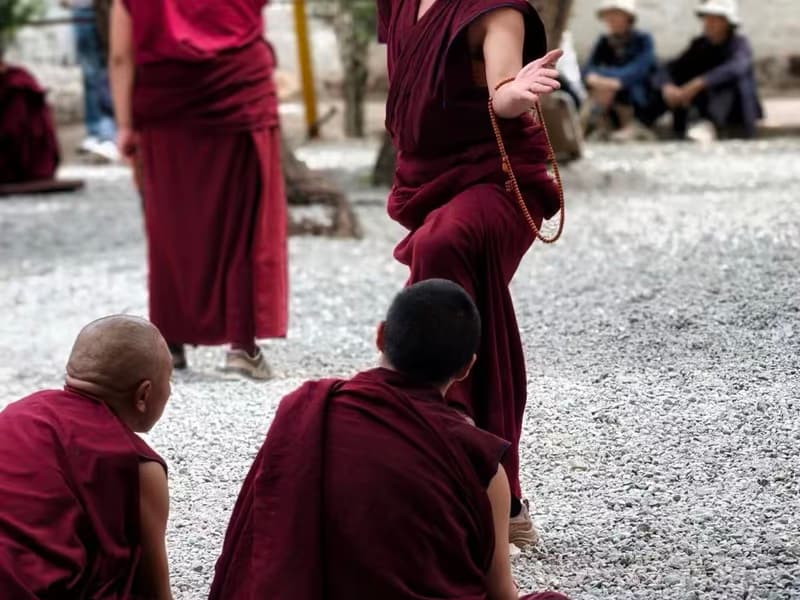
Religious site behaviour matters in ways it may not at other Chinese destinations. Tibet's monasteries and pilgrimage circuits are active places of practice, not heritage sites. Knowing the basic rules — which direction to walk, what not to touch, where not to point a camera — is a practical courtesy that prevents friction.
What to Watch For
Altitude Sickness (AMS)
- Symptoms: Headache, nausea, fatigue, dizziness — onset typically 2–12 hours after arrival.
- Standard response: Keep day one low-activity; drink 3–4 litres of water; skip alcohol; avoid long hot showers (heat raises heart rate). Most symptoms resolve within 48 hours.
- Warning signs requiring immediate descent: breathlessness at rest, inability to walk straight, confusion. These indicate High Altitude Pulmonary Oedema (HAPE) or High Altitude Cerebral Oedema (HACE) — both medical emergencies. Descend immediately and seek care.
- Oxygen: Most hotels in Lhasa provide oxygen bags (free or ¥20–50 per bag); some rooms have piped oxygen. Confirm availability at check-in rather than waiting for symptoms.
- Medication: Acetazolamide (Diamox) can reduce symptoms if started 1–2 days before arrival. It requires a prescription and is not suitable for everyone — consult a travel health professional before use.
TTB Permit Compliance
- The Tibet Travel Bureau permit is required for all foreign nationals entering Tibet Autonomous Region. No exceptions, no on-arrival processing.
- Apply through a licensed Tibetan travel agency: 5–8 weeks before entry during peak season (May–October), at least 4 weeks off-season.
- Some areas beyond Lhasa — including the Ali Prefecture and Everest Base Camp — require an additional Public Security Bureau (PSB) permit. Confirm with your agency before planning day trips.
- Carry your passport and TTB permit (printed or clear screenshot) at all times. Checkpoints on roads into Lhasa will verify them.
Religious Site Etiquette
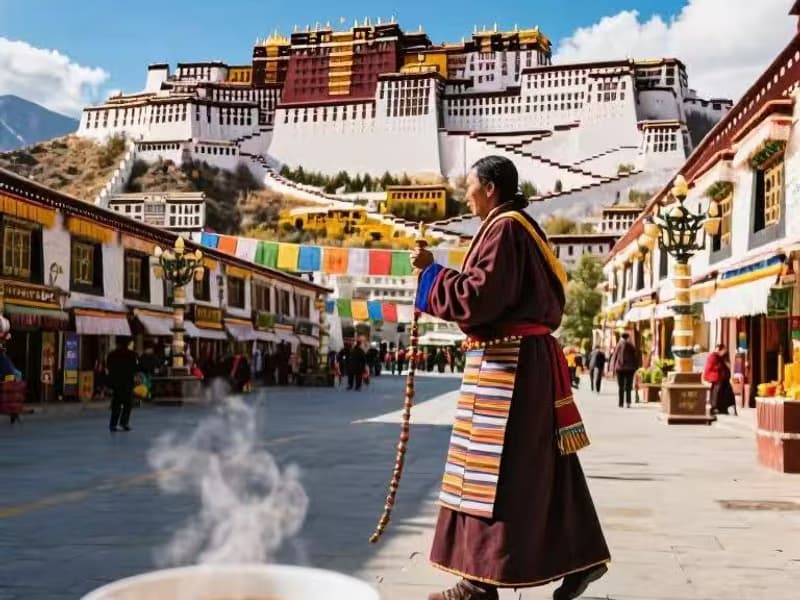
- Pilgrim circuits walk clockwise. This applies to Barkhor Street, the circuit around Potala Palace, and most kora routes. Walking counter-clockwise disrupts the flow and is considered disrespectful.
- Remove hats before entering temple halls. Some inner halls require removing shoes — look for signs at the entrance.
- Do not touch prayer wheels, statues, or ritual objects without explicit permission.
- Photography inside temple halls is often restricted or requires a separate paid permit. Ask before raising your camera.
- Keep a respectful distance from pilgrims — observing is fine, pressing close for photos is not.
Photography Sensitivity
- Do not photograph military installations, police, checkpoints, or government buildings.
- Some areas have visible no-photography signs; follow them.
Practical Toolkit
| Item | Details |
|---|---|
| Emergency numbers | Ambulance: 120 / Police: 110 / Fire: 119 |
| Main hospital | Tibet Autonomous Region People's Hospital, Lhasa — has experience with altitude-related cases |
| Serious cases | Arrange transfer to Chengdu if condition warrants — discuss with your travel agency in advance |
| Travel insurance | Required — must explicitly cover high-altitude rescue and emergency medical evacuation; standard policies often exclude this, verify before purchasing |
| Oxygen bags | Available from hotel reception and pharmacies; ¥20–50 per bag |
| Agency emergency contact | Keep your TTB travel agency's 24-hour number saved — they are often the fastest route to local medical assistance |
FAQ
Q: Can I prevent altitude sickness before I arrive? Taking acetazolamide (Diamox) starting 1–2 days before arrival reduces symptoms for most people, but requires a prescription. Staying well-hydrated and keeping day one genuinely low-activity is the baseline approach that applies to everyone.
Q: Is there English-speaking medical care in Lhasa? The Tibet Autonomous Region People's Hospital has experience with foreign visitors, but consistent English-language service is not guaranteed. Your TTB travel agency or local guide is the most reliable way to navigate medical situations — factor that into your emergency plan.
Q: Are there photography rules I might accidentally break? Streets, landscapes, and public spaces are generally fine. The main areas to watch are temple interiors (ask first), any site with posted restrictions, and anything that could be classified as military or security infrastructure. When in doubt, ask.
Having a valid TTB permit, treating day one as a rest day, and walking in the right direction around the pilgrimage circuits — these three things cover the majority of what you need to know before arriving in Lhasa. Altitude sickness is a predictable physiological response, not an unpredictable hazard; preparing for it means it rarely derails an itinerary.
Related Guides: