Last updated June 2026. Admission prices, permit requirements, and daily visitor caps are subject to change — verify with your travel agency before departure.
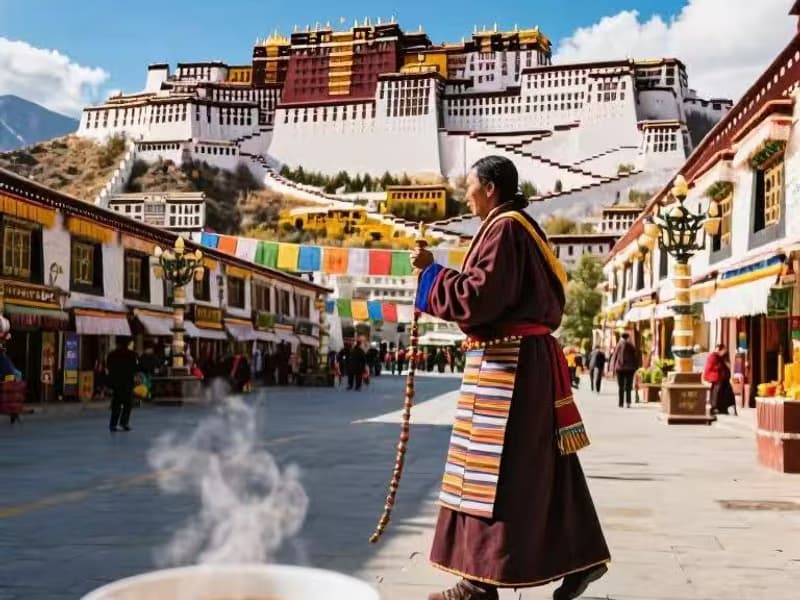
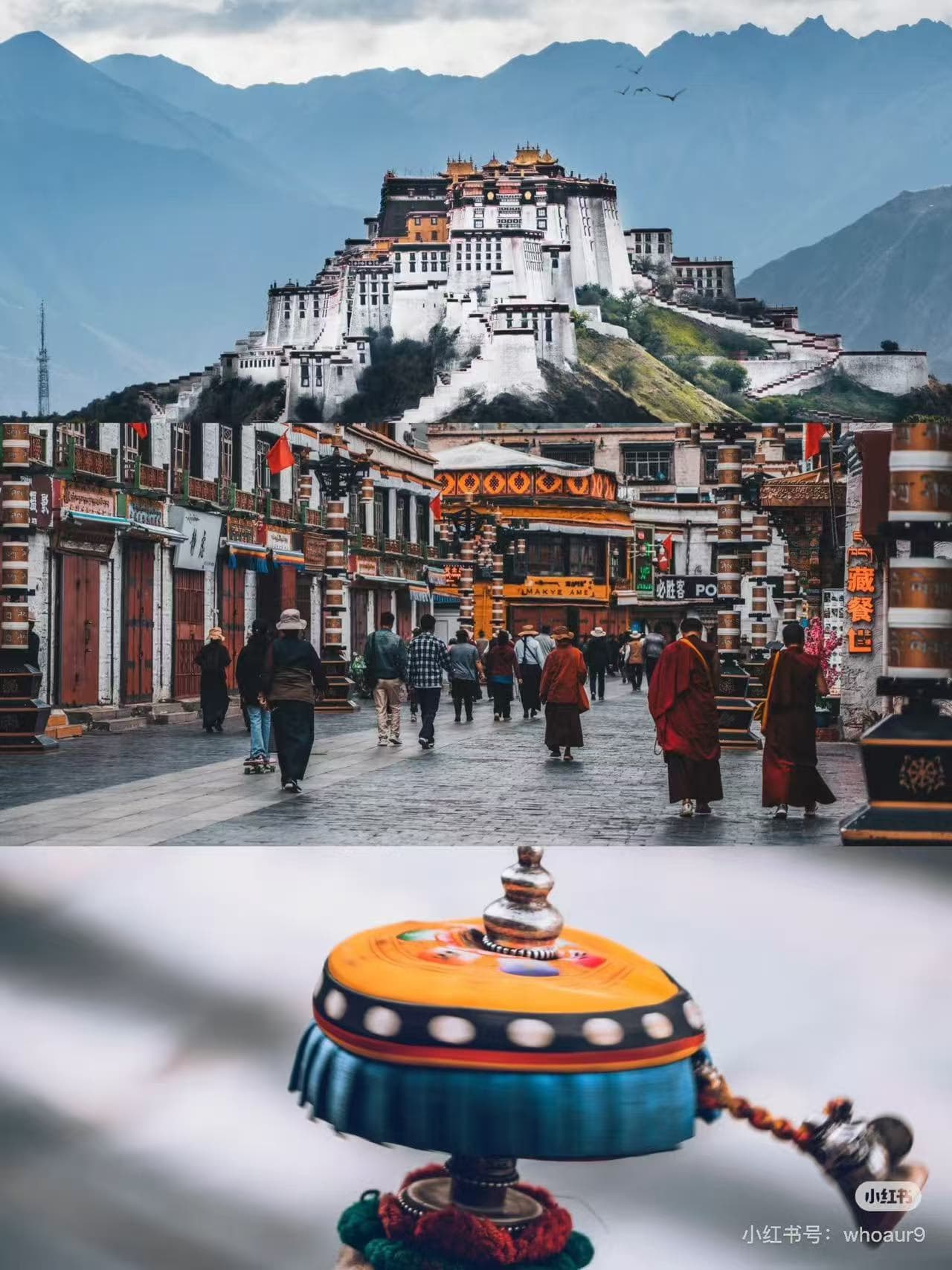
Pilgrims have been circling Jokhang Temple since before most visitors are awake. By 7am on Barkhor Street the kora is in full motion — butter lamp smoke drifting across worn stone, the steady sound of murmured prayers, the rhythm of people who have been doing this for years. Lhasa draws visitors for genuinely different reasons: some come for exactly this, and plan their days around monastery opening hours and the afternoon debate sessions at Sera. Others arrive for the plateau itself — the salt lakes at altitude, the open grassland, the sky at 4,700 metres. Both are available. What they don't share is an itinerary. A trip focused on monasteries stays mostly in the city centre; a trip focused on landscapes requires advance permits, agency logistics, and full days outside. Knowing which type of trip you're on before you arrive saves time you don't have to waste.
One Thing to Sort Before Everything Else
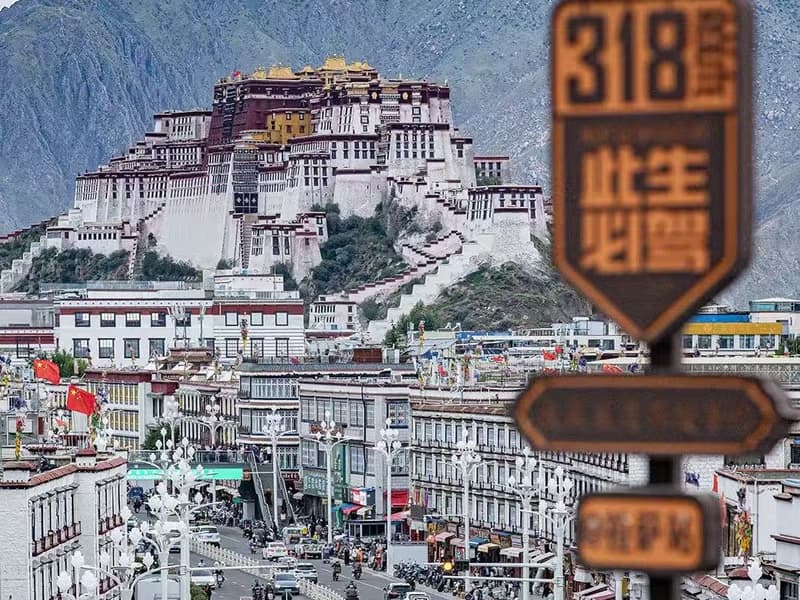
Whatever brings you to Lhasa, Potala Palace (¥200) is the one site where not booking in advance means not getting in. Daily entry is capped at 2,300 visitors. In peak months — roughly May through September — tickets sell out five to seven days ahead. Booking requires your passport number and must be done through a travel agency, the Trip.com English-language platform, or the official WeChat mini-program (hotel staff can help with the mini-program process if you're not familiar with it). Morning sessions run 9:00–12:00; afternoon sessions run 12:00–18:00. Each visit is limited to two hours, and the two-hour limit is enforced on-site.
This is the only part of a Lhasa itinerary that can be blocked by not acting early enough. Sort it when you book your flights. Full booking options, what's inside, and where to spend your limited time are covered in the Potala Palace guide.
If the Monasteries Are the Point
Four sites in the city centre repay serious time:
Jokhang Temple (¥85) is the religious centre of Lhasa. The Barkhor circuit surrounding it is the city's main pilgrimage kora — walked clockwise, from before sunrise until evening. The critical timing is before 8am: the circuit is densest with pilgrims then and the atmosphere is completely different from mid-morning. By 9am the first tour groups arrive and the dynamic shifts. If you visit once, go early and plan it as your first stop of the day.
Sera Monastery (¥55) has two distinct reasons to visit. In the morning, the complex is open for wandering — courtyards, chapels, monks going about their day. The main draw is the afternoon debate session, held from approximately 14:30 to 16:30 in an open courtyard. Monks debate philosophical questions in pairs, punctuating arguments with sharp, formal hand-clapping that is specific to this tradition. Nothing quite like it exists elsewhere. Debates are cancelled on Sundays and occasionally on other days — confirm the morning of your visit with your hotel or agency, since arriving at 14:00 to find no debate happening is a common frustration.
Drepung Monastery (¥55) sits roughly 8 kilometres west of the city centre, accessible by taxi for approximately ¥30–40 one way. Historically the largest monastery in Tibet, it receives far fewer visitors than Jokhang or Sera. The result is a different quality of visit: the pace is slower, monks are less interrupted, and the hillside terrain gives the complex a sense of scale that flat city sites don't have. The walk to the upper sections involves meaningful climbing at altitude. Wait until you've had at least two full days in Lhasa before attempting it.
Barkhor Street (free) is not a conventional attraction, but walking the kora circuit at dawn or dusk is the most unmediated way to understand what daily religious life looks like here. Walk clockwise. The circuit at 6:30am and the same circuit at 2pm are not the same place.
If the Landscape Is the Point
Lhasa's city centre offers limited scenery. The main exception is Zongjiaolusang Park (free, walking distance from most hotels), where the park lake reflects Potala Palace in the hour after sunrise. The light window is short — roughly 60 minutes — but it's one of the most photographed angles in the city and it costs nothing but an early start.
The landscape that Lhasa is known for is outside the city entirely. Both options below require an additional permit beyond the standard TTB (Tibet Travel Bureau) permit that all foreign visitors need to enter Tibet.
Namtso Lake is a salt lake at 4,718 metres, approximately 180 kilometres north of Lhasa. The water shifts colour across the day — pale blue in early morning, deepening as the light changes. The surrounding terrain is open grassland and distant ridgelines. It is typically arranged as a full-day round trip by agency-organised vehicle; independent travel is not realistic given the permit requirements.
⚠️ Permit requirement: Namtso falls in Nagqu Prefecture, outside the Lhasa region. Foreign visitors need an Alien's Travel Permit in addition to the TTB permit. This cannot be arranged independently — it requires a TTB-licensed travel agency, and should be applied for at the same time as your TTB permit, ideally two to three weeks before departure. Any agency offering a Namtso day trip will include permit arrangement in their package; confirm this when booking.
Yamdrok Lake lies on the road toward Shigatse, roughly 100 kilometres from Lhasa. The water is a deeper blue-green than Namtso and the surrounding landscape has a different character. It's often combined with Gyantse or Shigatse into a multi-day trip, though day trips from Lhasa also exist. The same Alien's Travel Permit requirement applies.
Both lakes are weather-dependent — clear skies make the colour pay off; overcast days are flatter. If you're building a trip around the lakes, a flexible travel window helps.
If You Want Both: A Four- to Five-Day Framework
Four days is a workable minimum to cover both tracks without compressing either. The sequencing matters: day one should stay low-effort for altitude adjustment, and Potala Palace is better not attempted until day two at the earliest.
| Day | Plan | Notes |
|---|---|---|
| Day 1 (arrival) | Zongjiaolusang Park + Barkhor kora on foot | Low exertion; altitude adjustment; good city orientation |
| Day 2 | Potala Palace (per booked session) | Most physically demanding; rest the afternoon |
| Day 3 | Jokhang Temple early morning → Sera Monastery afternoon debates | Both have specific time windows; pairing them works |
| Day 4 | Namtso Lake full-day agency trip | Permit must be arranged in advance; not recommended for anyone still experiencing altitude effects |
| Day 5 (if available) | Drepung Monastery | Quiet finish; rewards those who prioritised monasteries |
Three-day version (monasteries only): replace day four with Drepung; keep days one through three as above.
Three-day version (landscape focus): keep Zongjiaolusang and Potala Palace; compress Jokhang and Sera into half-days; use day three for the lake trip.
What Goes Wrong
Potala Palace booked too late. Peak-season slots sell out days ahead. Many visitors arrive in Lhasa expecting to buy tickets the next morning and find the following week already full. Book before you leave home.
Sera debates missed on a Sunday. Debates don't run on Sundays and occasionally on other days. This catches visitors who build their whole day three around the 14:30 session without confirming first. Check the morning you plan to go.
Namtso attempted without permit. The checkpoint on the road to Namtso will turn you back without the Alien's Travel Permit. This permit requires your TTB agency and advance planning — it cannot be sorted on the day.
Going to Drepung on day one. The uphill climb at altitude, on the day of arrival, is a reliable way to spend the rest of the afternoon recovering in your hotel. Wait until day two at minimum, day three if you came from sea level.
Practical Information
| Site | Admission | Best timing | How to arrange | Notes |
|---|---|---|---|---|
| Potala Palace | ¥200 | Morning session preferred | Travel agency / Trip.com English; 5–7 days ahead in peak season | 2-hour visit limit enforced; no walk-up tickets |
| Jokhang Temple | ¥85 | Before 8am | Ticket window / Trip.com | Crowds build significantly from 9am |
| Sera Monastery | ¥55 | Afternoon (debates 14:30) | Ticket window | Closed Sundays; confirm debate days before visiting |
| Drepung Monastery | ¥55 | Morning | Ticket window | 8km west of centre; taxi ¥30–40 one way; wait 2+ days after arrival |
| Barkhor Street | Free | Dawn or dusk | No booking | Walk clockwise |
| Zongjiaolusang Park | Free | First hour after sunrise | No booking | Best Potala Palace reflection angle |
| Namtso Lake | ~¥120 | Full day | Agency day trip (includes vehicle + permit logistics) | Alien's Travel Permit required; arrange with TTB permit |
| Yamdrok Lake | ~¥40 | Full day | Agency day trip or as part of Shigatse route | Same permit requirement |
Lhasa has three hard constraints that shape everything else: Potala Palace requires advance booking, the lakes outside the city require permits that take planning, and day one needs to be slow. After those are accounted for, the rest is a matter of what you came for. The monasteries are walkable, low-cost, and concentrated in the city centre. The landscapes require more logistics but deliver something the city cannot — the open plateau, the altitude light, the lakes at almost 5,000 metres. Both are worth the effort. Which comes first depends on why you booked the ticket.
Lhasa Travel Guide · Getting to Lhasa · Lhasa Packing List · Lhasa Safety Guide