The permit arrives a few days before departure — a printed document with your name, a reference number, a stamp. Without it, you will not board the flight to Lhasa. That is the part most packing guides leave out. This list begins where preparation actually begins: documents before clothes, altitude before cameras. The city sits at 3,650 metres, and that single fact shapes what your skin needs, how fast your batteries drain, and what you can realistically find on arrival if you've forgotten something. Plan for that, and the rest is manageable.
At a Glance
| Category | Key point |
|---|---|
| Documents | TTB Permit required for all foreign visitors — must be arranged weeks in advance through a licensed travel agency |
| Sun protection | UV intensity at altitude is roughly 3× that of coastal cities — SPF 50+ is the baseline, not the premium option |
| Clothing | Down jacket required regardless of season; temperature swings of 15–20°C within a single day are normal |
| Health | Acetazolamide (Diamox) for altitude — obtain from your doctor before departure |
| Batteries | Cold temperatures reduce battery life significantly — carry spares |
| Cash | ¥1,000–1,500 buffer recommended; some vendors and rural sites are cash-only |
The Documents That Let You Board
This is the section where a missing item means the trip stops. Unlike most destinations, where forgotten items can be replaced or improvised, Tibet entry documents must be in hand before you reach the check-in counter.
| Document | Who needs it | How to get it |
|---|---|---|
| Passport (6+ months validity from travel dates) | Everyone | — |
| Chinese visa (L or F class) or confirmed visa-free eligibility | Most nationalities | Chinese embassy in home country |
| Tibet Travel Bureau Permit (TTB Permit) | All foreign visitors, no exceptions | Licensed travel agency handles the application on your behalf |
| Alien Travel Permit | Only if travelling outside Lhasa city limits (Namtso, Shigatse, etc.) | Same travel agency, applied at the same time as TTB |
How the permit handover works: The TTB Permit is a physical document. Your travel agency will either courier it to you in advance or hand it over at your departure airport — Chengdu Tianfu and Xining Caojiabao are the most common handover points for Lhasa-bound travellers.
Airlines check the permit at check-in, not at the gate. Arrive with extra time.
Photograph the permit immediately and email it to yourself. Keep the original in your carry-on bag, not in checked luggage. If your travel dates change significantly after the permit is issued, contact your agency — permits are tied to specific itineraries and may need to be reissued.
For the full permit application process and timeline, see Getting to Lhasa.
Altitude and Your Skin: What Changes at 3,650 Metres
UV radiation in Lhasa is approximately three times the intensity of Shanghai at sea level. The effect is not gradual — a full day outdoors without serious sun protection will burn you faster than you expect, including on overcast days when the sky looks harmless.
Sunscreen: SPF 50+ is the starting point. Bring enough for the full trip. Lhasa has a Watsons and a handful of pharmacies, but selection is limited and prices run 20–30% higher than inland cities. Restocking there is possible but unreliable for specific products.
Lip balm: The air at altitude is significantly drier than anywhere at sea level — drier than Beijing in its driest winters. Lips crack quickly and stay cracked. Bring two or three sticks and keep one accessible in a jacket pocket throughout the day.
Moisturiser: Skin dehydration accelerates at altitude. A basic face moisturiser and hand cream are worth the weight. The toiletries provided by most mid-range and budget hotels in Lhasa are low quality and won't compensate.
Sunglasses: Useful year-round. Essential after any snowfall — reflected glare off surfaces becomes genuinely uncomfortable, even in summer.
Toiletries: Bring Your Own Basics
Budget and mid-range hotels in Lhasa frequently provide low-grade shampoo, conditioner, and body wash — thin, generic formulations that are not worth relying on if you have any preferences. Higher-end properties are more consistent, but you won't know the quality until check-in.
Practical approach: carry travel-size bottles (under 100ml to comply with carry-on liquid rules) of your usual shampoo and body wash. For moisturiser, lip care, and sunscreen — items your skin will need more of at altitude — pack your preferred brands rather than planning to substitute hotel products or buy locally.
Clothing: One Rule Covers Everything
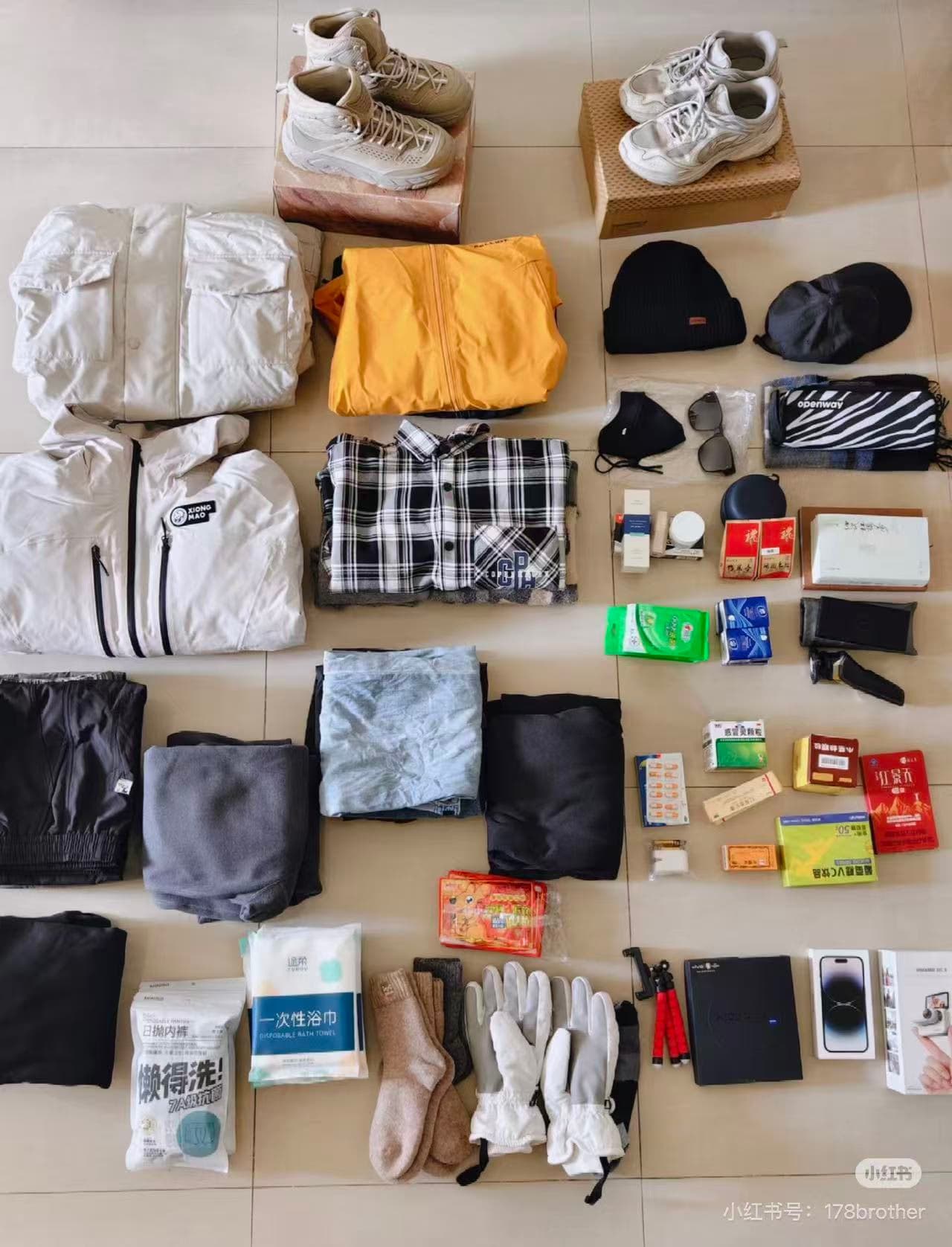
Lhasa's temperature logic is simple: the sun is intense, but the air is cold, and the gap between the two is large. In July, midday temperatures under direct sun reach 25–28°C. After sunset the same day, the temperature drops to 8–12°C. In October, daytime highs are 10–15°C; nights drop below freezing.
Layers solve this. Bulk does not.
| Layer | What to bring | Notes |
|---|---|---|
| Base | 3–4 quick-dry t-shirts | Avoid cotton — it holds moisture and stays cold when damp; synthetic or merino dries faster |
| Mid | Fleece or thin down vest × 1 | Easy to add or remove; useful inside monastery halls, which can be cold regardless of outside temperature |
| Outer | Lightweight down jacket × 1 | Required even in summer — the evening temperature drop is not a rare event, it's daily |
| Wind layer | Thin shell jacket (optional) | Useful for day trips outside the city or motorbike transport |
| Bottoms | 1 warm trouser + 1 lightweight long trouser | Skip shorts: monasteries require covered knees, and evenings are cold regardless of the season |
Religious site dress code: Shoulders and knees must be covered when entering monastery worship areas. A t-shirt with long trousers is accepted at most entrances. Sleeveless tops need an additional layer. A light long-sleeved shirt or packable layer kept in your bag handles unexpected entry situations without having to return to your hotel.
For guidance on what to expect at religious sites, see Tibetan Culture Guide for Visitors.
The Health Kit: Altitude First
Altitude sickness prevention
Acetazolamide (Diamox) is the most commonly used prescription medication for preventing altitude sickness. The standard approach is to begin one day before arrival in Lhasa and continue for two to three days while your body acclimatises. A typical dose is 125mg twice daily, though your doctor will advise based on your health history.
Common side effects include increased urination and mild tingling in the fingers and toes. Both are normal and not a reason to stop the medication.
Get this from your doctor at home before departure. It requires a prescription, and finding it in Lhasa — if you could find it at all — would be slower and more uncertain than obtaining it in advance.
Other items worth packing:
| Item | Why it matters in Lhasa |
|---|---|
| Ibuprofen or paracetamol | Altitude headaches are the most common complaint; having this immediately available means not searching a pharmacy at night |
| Throat lozenges | Dry air causes persistent throat irritation — not illness, only discomfort |
| Anti-diarrhoeal medication | Standard precaution for diet change |
| Any personal prescription medication | Bring more than you need — Lhasa is not the place to run short |
What hotels provide: Most mid-range and above hotels keep supplemental oxygen available — small canisters at the front desk or a bedside machine in rooms. This is for acute discomfort, not routine daily use. If you feel persistent nausea or a severe headache on arrival day, the right response is rest, not sightseeing with an oxygen canister in hand.
Cameras and Batteries in the Cold
Cold temperatures reduce battery capacity significantly. A battery that lasts a full day in a warm city may give you four or five hours in Lhasa's morning cold. This is normal battery chemistry, not a fault.
- Carry at least one spare battery for your camera. Two if you're shooting heavily or over multiple consecutive days.
- When not actively shooting, keep batteries in an inside jacket pocket. Body warmth maintains charge better than a cold bag compartment.
- Bring the memory cards you need. Lhasa has some electronics shops, but quality card selection is limited. Do not plan to restock there.
- A UV filter for your lens is worth adding — high-altitude UV exposure over several days has a cumulative effect on unprotected glass.
For phone photographers: keep your phone in an inside jacket pocket when not in use. The cold drains phone batteries faster than camera batteries. The usable light window in Lhasa is roughly one hour after sunrise and ninety minutes before sunset — a reliable power situation is what makes those windows count.
Cash and Connectivity
Cash
WeChat Pay and Alipay work at main hotels, larger restaurants, and at Potala Palace ticket counters (which now accept international bank cards through the app). However:
- Small stalls around Barkhor Street and roadside vendors outside the city are mostly cash-only
- ATMs exist in central Lhasa (Bank of China and Agricultural Bank near the Potala Palace area), but weekend and holiday availability is inconsistent
- Recommended buffer: ¥1,000–1,500 for a 4–5 day trip, adjusted upward for longer stays or if your itinerary extends outside the city
Connectivity and internet access
Internet access in Tibet is subject to restrictions that go beyond what visitors experience elsewhere in China. Services and platforms that function normally in Beijing or Shanghai may not be accessible here.
Set up any apps or internet access tools you rely on before you arrive in Lhasa — configuring anything new once inside Tibet is significantly more difficult. This also applies to downloading offline content: maps, translation packs, and reading material should all be cached before you board your flight or train.
Offline navigation: download Amap (Gaode) or Maps.me offline packs for Lhasa before departure. Amap provides better local detail for finding specific restaurants and temples; Maps.me works well for non-Chinese speakers reading place names. Both are free. Download them on Wi-Fi before you board.
What You Can Leave Behind
- Heavy trekking boots: The main city monasteries and Potala Palace are accessible in comfortable walking shoes. Technical footwear is only necessary if your itinerary includes hiking routes outside Lhasa proper.
- Bulky paper guidebooks: The city centre is compact and phone navigation is sufficient.
- Formal clothing: A standard Lhasa itinerary has no occasion that requires it.
- Cotton base layers: Cotton holds moisture, dries slowly, and feels cold when damp. Quick-dry synthetic or merino wool performs substantially better at altitude.
Pre-Departure Checklist
DOCUMENTS □ Passport (6+ months validity from your travel dates) □ Chinese visa confirmed / visa-free eligibility verified □ TTB Tibet Travel Permit — physical copy in carry-on bag □ Alien Travel Permit if leaving Lhasa city (Namtso, Shigatse, etc.) □ Permit photographed and backed up to email ALTITUDE AND SUN □ Acetazolamide — prescribed, packed, dosing schedule confirmed with doctor □ SPF 50+ sunscreen (enough for full trip) □ Lip balm × 2–3 sticks □ Moisturiser for face and hands □ Sunglasses CLOTHING □ Lightweight down jacket (regardless of season) □ Quick-dry base layers × 3 or more □ Long trousers (for monasteries and cold evenings) □ Layer for covering shoulders at religious sites HEALTH □ Ibuprofen or paracetamol □ Throat lozenges □ Anti-diarrhoeal medication □ All personal prescription medication — full trip supply plus buffer ELECTRONICS □ Spare camera battery × 1 minimum □ Portable battery pack (phone) □ Memory cards (full allocation for trip) MONEY AND CONNECTIVITY □ CNY cash ¥1,000–1,500 minimum □ Offline maps downloaded (Lhasa and surrounding areas) □ Internet access tools configured before departure □ Translation app with Chinese offline language pack installed TOILETRIES □ Shampoo and body wash (travel-size, 100ml or under) □ Personal skincare items
Lhasa's packing list is shorter than most people expect and more specific than most guides provide. The documents have a lead time of several weeks and cannot be improvised on arrival. The altitude gear — sunscreen, lip care, Diamox — is available at home and either unavailable or expensive in Lhasa. The down jacket is necessary in every season. Get those three priorities sorted early, and the rest of the preparation follows the same logic as any other trip to a remote destination with limited resupply options.
Lhasa Travel Guide · Getting to Lhasa · Lhasa Safety Guide: Altitude, Permits, and Temple Etiquette